

Every November, Movember shines a spotlight on men’s health, encouraging conversations about prostate cancer, testicular cancer, and mental well-being. It’s an opportunity to move beyond the moustaches and fundraising campaigns to discuss something that can make a meaningful difference: understanding your health risks, recognizing potential warning signs, and knowing when to seek medical advice.
Prostate cancer is one of the most common cancers affecting men in Canada. While a diagnosis can feel overwhelming, being informed about screening, lifestyle choices, and available support can help you make confident decisions about your health.
Whether you’re thinking about prostate cancer screening for the first time, supporting a loved one through treatment, or looking for ways to maintain your health as you age, this guide offers an overview of what you need to know.

What is prostate cancer?
The prostate is a small gland, approximately the size of a walnut in younger adults, located below the bladder and in front of the rectum. It surrounds part of the urethra, the tube that carries urine out of the body, and produces fluid that forms part of semen.
Prostate cancer develops when cells in the prostate begin to grow abnormally and uncontrollably. Many prostate cancers grow slowly and may never cause significant problems during a person’s lifetime. Others are more aggressive and can spread beyond the prostate to nearby tissues, lymph nodes, or distant organs, particularly the bones.
The risk of prostate cancer increases with age, and many people have no noticeable symptoms in the early stages. This is one reason conversations about screening and personal risk are important.
Several factors can influence prostate cancer risk:
- Age: Risk increases significantly after age 50.
- Family history: Having a father, brother, or other close relative with prostate cancer can increase risk, particularly if they were diagnosed at a younger age or multiple relatives have been affected.
- Inherited genetic factors: Certain inherited gene changes, including BRCA1 and BRCA2 variants, can increase risk.
- Ancestry: Black men, including men of African or Caribbean ancestry, experience higher rates of prostate cancer and are more likely to develop aggressive disease.
- Lifestyle and metabolic health: Body weight, physical activity, and dietary patterns are being studied for their potential influence on the risk of developing aggressive prostate cancer and on outcomes after diagnosis.
It’s important to remember that having risk factors does not mean you will develop prostate cancer, and people without known risk factors can still be diagnosed.
Prostate cancer screening guidelines in British Columbia
Screening looks for signs of disease before symptoms develop. For prostate cancer, two tests are commonly discussed: the prostate-specific antigen (PSA) blood test and the digital rectal examination (DRE).
- PSA blood test: PSA is a protein produced by prostate cells. A blood test measures the amount of PSA in circulation. Elevated PSA levels can occur with prostate cancer, but they can also be caused by benign prostate enlargement, inflammation, infection, or other factors. A raised result does not automatically mean cancer is present.
- Digital rectal examination (DRE): During this examination, a healthcare professional inserts a gloved, lubricated finger into the rectum to feel the prostate for unusual firmness, enlargement, or irregularities. A DRE may be considered as part of an assessment, but it cannot rule out prostate cancer on its own.
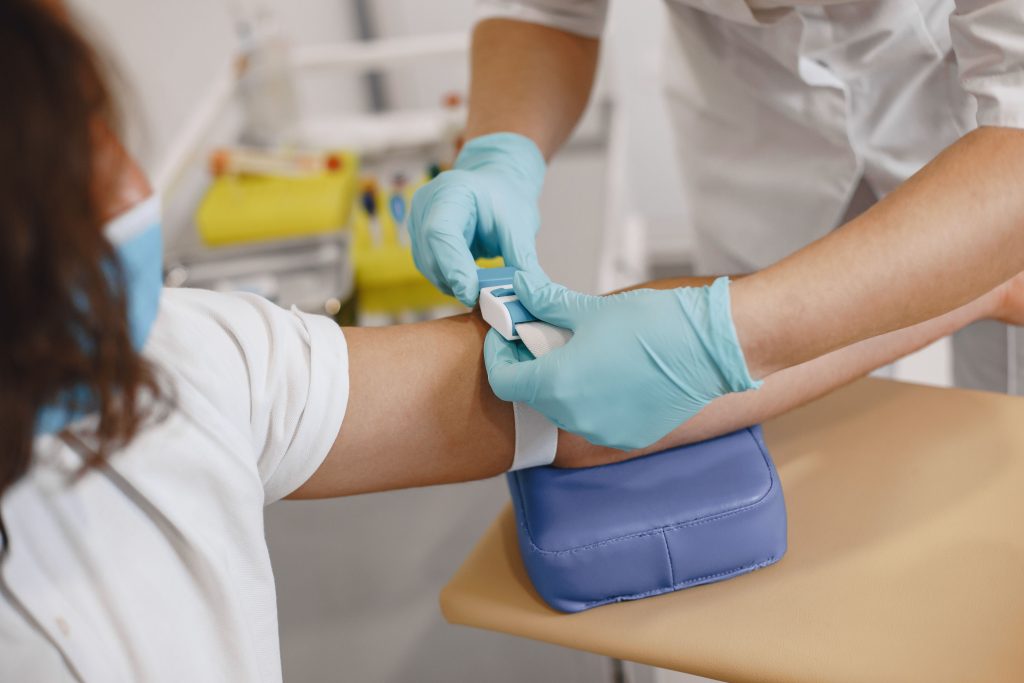
What should you know about screening in BC?
In British Columbia, routine PSA screening is not universally recommended for everyone without symptoms. Instead, screening is generally approached through an informed discussion between an individual and their healthcare provider, taking personal risk, age, overall health, and preferences into account.
This is because screening has potential benefits as well as limitations. It may detect clinically significant cancers earlier, but it can also lead to false-positive results, additional investigations, anxiety, and the diagnosis and treatment of slow-growing cancers that might never have caused harm.
When deciding whether to have a PSA test, the following factors may be considered:
- Age 50 and older: This is a reasonable time for many people at average risk to begin discussing the potential benefits and harms of screening with their healthcare provider.
- Increased risk: People with a strong family history, relevant inherited genetic variants, or Black ancestry may benefit from discussing screening earlier, often around age 40–45, depending on their individual circumstances.
- Age and overall health: The potential benefit of screening depends partly on life expectancy, existing health conditions, and whether someone would be able and willing to pursue further investigation and treatment if needed.
- Abnormal results: An elevated PSA does not establish a cancer diagnosis. Depending on the circumstances, follow-up may include repeating the test, further examination, imaging such as MRI, or referral to a urologist for consideration of a biopsy.
Screening recommendations can evolve as evidence changes, so it is worth confirming current BC guidance with your family doctor or another qualified healthcare professional.
The key takeaway: There is no single screening schedule that is right for everyone. An informed, individualized discussion can help you weigh the possible benefits and harms and decide what makes sense for you.
Warning signs and symptoms; when to talk to your GP
Prostate cancer often causes no symptoms in its early stages. When symptoms do occur, they can overlap with those of benign prostatic hyperplasia (BPH), a non-cancerous enlargement of the prostate, or urinary tract conditions.
Possible symptoms include:
- Needing to urinate more frequently, particularly at night.
- Difficulty starting urination or a weak or interrupted urine stream.
- Feeling that the bladder has not completely emptied.
- Urgency or difficulty postponing urination.
- Blood in the urine or semen.
- Persistent pain in the lower back, hips, pelvis, or other bones, particularly when accompanied by other concerning symptoms.
- Unexplained weight loss, fatigue, or a general decline in health in more advanced cases.
These symptoms do not necessarily indicate prostate cancer. Many have more common, non-cancerous explanations. However, new, persistent, worsening, or unexplained symptoms deserve medical assessment, even if you are younger than the usual screening age.

Further resources for learning about prostate cancer
If you would like to learn more about prostate cancer, screening, prevention, treatment options, and support, the following organizations offer reliable, evidence-informed information.
- BC Cancer provides information relevant to people living in British Columbia, including screening considerations and patient resources.
- The Canadian Cancer Society offers accessible information about prostate cancer risk factors, symptoms, diagnosis, and treatment.
- For information about prostate cancer awareness, education, and support services, visit Prostate Cancer Foundation Canada.
- You can also explore HealthLink BC for additional health information. These resources are useful starting points for further learning and general awareness.
Seeking medical attention
If you notice persistent urinary changes, blood in your urine or semen, ongoing pelvic discomfort, or other unexplained changes in your health, these symptoms are worth discussing with a qualified healthcare professional. While they do not necessarily indicate prostate cancer, understanding their potential causes is an important part of being informed about your health.
Some symptoms, such as an inability to urinate, significant bleeding, or severe and rapidly worsening pain, may require urgent medical attention. Being aware of these warning signs can help you better understand when symptoms should not be overlooked.
Learning about prostate cancer, its potential symptoms, and available screening options can help encourage informed conversations about men’s health. Awareness is an important first step toward understanding your health and knowing where to find reliable information and support.

Disclaimer: The content provided on this blog is intended for informational purposes only and should not be construed as medical advice. While we strive to present accurate and up-to-date information, the field of naturopathic medicine is continually evolving, and individual health circumstances vary. Therefore, the information herein may not apply to your specific health situation.
Please be aware that engaging with this blog does not establish a doctor-patient relationship. For personalized medical advice, diagnoses, or treatment plans, we recommend scheduling a consultation with a qualified naturopathic physician or other licensed healthcare provider.
In the event of a medical emergency, contact emergency services immediately.
References
Guo, F., McGee, E. E., Chiu, Y.-H., Giovannucci, E., Mucci, L. A., & Dickerman, B. A. (2025). Evaluating recommendation-based dietary and physical activity strategies for prostate cancer prevention: A target trial emulation in the Health Professionals Follow-up Study. American Journal of Epidemiology, 194(2), 449–459. https://doi.org/10.1093/aje/kwae184
Hurwitz, L. M., Dogbe, N., Barry, K. H., Koutros, S., & Berndt, S. I. (2023). Obesity and prostate cancer screening, incidence, and mortality in the Prostate, Lung, Colorectal, and Ovarian Cancer Screening Trial. Journal of the National Cancer Institute, 115(12), 1506–1514. https://doi.org/10.1093/jnci/djad113
Jochems, S. H. J., Fritz, J., Häggström, C., Järvholm, B., Stattin, P., & Stocks, T. (2023). Smoking and risk of prostate cancer and prostate cancer death: A pooled study. European Urology, 83(5), 422–431. https://doi.org/10.1016/j.eururo.2022.03.033
Kerr, J., Anderson, C., & Lippman, S. M. (2017). Physical activity, sedentary behaviour, diet, and cancer: An update and emerging new evidence. The Lancet Oncology, 18(8), e457–e471. https://doi.org/10.1016/S1470-2045(17)30411-4
Kristal, A. R., Darke, A. K., Morris, J. S., Tangen, C. M., Goodman, P. J., Thompson, I. M., Meyskens, F. L., Goodman, G. E., Minasian, L. M., Parnes, H. L., Lippman, S. M., & Klein, E. A. (2014). Baseline selenium status and effects of selenium and vitamin E supplementation on prostate cancer risk. Journal of the National Cancer Institute, 106(3), Article djt456. https://doi.org/10.1093/jnci/djt456
Lin, P.-H., Burwell, A. D., Giovannucci, E. L., Loeb, S., Chan, J. M., Tuttle, B., De Nunzio, C., Bjartell, A., Aronson, W., & Freedland, S. J. (2025). Dietary patterns in prostate cancer prevention and management: A systematic review of prospective cohort studies and randomized clinical trials. European Urology, 88(6), 571–588. https://doi.org/10.1016/j.eururo.2025.07.017
Wilson, K. M., & Mucci, L. A. (2019). Diet and lifestyle in prostate cancer. In Advances in experimental medicine and biology (Vol. 1210, pp. 1–27). Springer. https://doi.org/10.1007/978-3-030-32656-2_1