

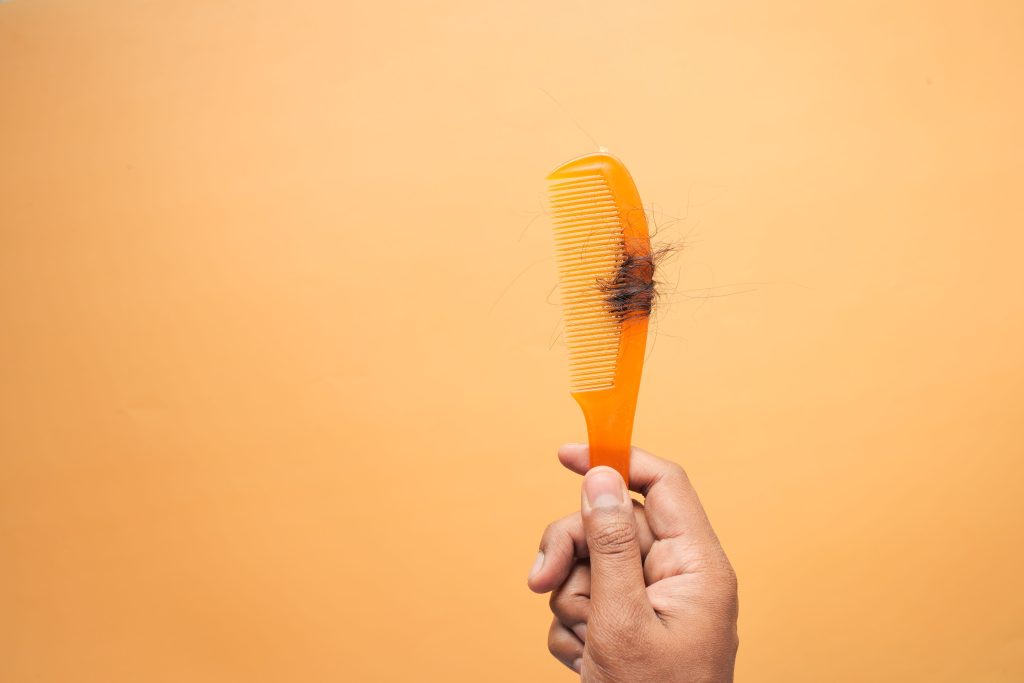
Hair loss is incredibly common, yet it can still be frustrating, distressing, and difficult to talk about. If you’ve noticed a widening part, thinning at the crown, or a receding hairline, you may be experiencing androgenic alopecia (AGA), the most common form of hair loss in both men and women. In fact, androgenic hair loss affects at least 50% of men and approximately 30% of women, with the likelihood increasing as we age.
The good news? Understanding what is happening beneath the surface can help you identify effective treatment options and avoid wasting time and money on products that aren’t backed by evidence.
What is Androgenic Hair Loss?
Androgenic hair loss is a genetic, hormone-driven condition that causes hair follicles to gradually shrink over time. While healthy hair follicles produce thick, pigmented hairs known as terminal hairs, in androgenic alopecia, these follicles become progressively smaller and begin producing shorter, finer hairs called vellus hairs. This process is known as follicular miniaturization. As more follicles undergo miniaturization, hair density decreases and the scalp becomes more visible.
Why Does it Happen?
The main hormone involved in androgenic hair loss is dihydrotestosterone (DHT). DHT is produced when the enzyme 5-alpha reductase converts testosterone into a more potent androgen. In people who are genetically predisposed to androgenic hair loss, certain hair follicles are particularly sensitive to the effects of DHT. Furthermore, when DHT binds to receptors in these follicles, it triggers changes that:
- Shorten the hair growth phase
- Cause follicles to gradually shrink
- Produce thinner, weaker hairs over time
- Eventually reduce overall hair density
Importantly, this does not necessarily mean that someone has high testosterone levels. Many people with androgenic hair loss have completely normal hormone levels, however, their hair follicles are simply more sensitive to DHT. Researchers have identified hundreds of genes that contribute to androgenic hair loss, which helps explain why it often runs in families.
What Does Androgenic Hair Loss Look Like?
Men typically experience a characteristic pattern of hair loss commonly referred to as male pattern baldness. Signs may include:
- A receding hairline at the temples
- Thinning at the crown (vertex)
- Progressive hair loss that can eventually connect these areas
Women usually experience hair loss differently, with common signs including
- A widening part
- Increased visibility of the scalp at the top of the head
- Reduced overall hair volume
- A thinner-feeling ponytail
Unlike men, women often maintain their frontal hairline and experience more diffuse thinning across the crown.

How Is Androgenic Hair Loss Diagnosed?
In many cases, androgenic hair loss can be diagnosed through a thorough health history and examination of the scalp. Because other conditions can cause or contribute to hair thinning, healthcare practitioners may also recommend blood work to assess for factors such as:
- Iron deficiency
- Thyroid dysfunction
- Vitamin deficiencies
- Hormonal imbalances
This is particularly important because not all hair loss is androgenic. Conditions such as stress-related hair shedding (telogen effluvium), autoimmune hair loss, and nutrient deficiencies can sometimes look very similar.
What Treatments Actually Work?
When it comes to hair loss, there is no shortage of products making bold claims. However, only a handful of treatments have consistently demonstrated benefits in clinical research, including:
- Pharmaceuticals: Several prescription and over-the-counter medications have been shown to slow hair loss and, in some cases, promote regrowth. These treatments work through different mechanisms, such as extending the hair growth phase or reducing the effects of hormones that contribute to follicular miniaturization. The most appropriate option depends on factors such as age, sex, medical history, and treatment goals.
- Low-Level Laser Therapy (LLLT): FDA-cleared laser devices use specific wavelengths of light to stimulate hair follicles and may improve hair growth in some individuals.
- Platelet-Rich Plasma (PRP): PRP involves injecting concentrated platelets from your own blood into the scalp, with studies showing improvements in hair density and hair count
- Microneedling: Microneedling uses tiny needles to create controlled micro-injuries in the scalp, which may stimulate growth factors involved in hair growth. Emerging research suggests it can improve outcomes, particularly when combined with treatments such as topical minoxidil.
- Addressing Underlying Health Factors: While androgenic hair loss is primarily genetic, identifying and correcting contributing factors such as iron deficiency, thyroid dysfunction, nutrient deficiencies, or hormonal imbalances may help optimize hair growth and improve treatment outcomes.
When Should You Seek Help?
Hair loss is often easier to treat in its early stages. If you’ve noticed any of the following symptoms, it may be worth seeking an assessment, as early intervention may help preserve existing hair and improve treatment outcomes:
- Progressive thinning
- A widening hair part
- A receding hairline
- Increased scalp visibility
- Ongoing hair shedding
Curious how Naturopathic Medicine can help you navigate androgenic hair loss? Book a consult with one of our Naturopathic Doctors Today:
The Bottom Line
Androgenic alopecia is the most common form of hair loss and affects millions of men and women worldwide. It occurs when genetically susceptible hair follicles become increasingly sensitive to DHT, leading to progressive follicular miniaturization and visible thinning over time.
Although androgenic hair loss is common, it is not something you simply have to accept. Evidence-based treatments may help slow progression and improve hair density in appropriate candidates. If you are concerned about hair loss, a comprehensive assessment can help determine the cause and identify the treatment options most likely to be effective for you.
Disclaimer: The content provided on this blog is intended for informational purposes only and should not be construed as medical advice. While we strive to present accurate and up-to-date information, the field of naturopathic medicine is continually evolving, and individual health circumstances vary. Therefore, the information herein may not apply to your specific health situation.
Please be aware that engaging with this blog does not establish a doctor-patient relationship. For personalized medical advice, diagnoses, or treatment plans, we recommend scheduling a consultation with a qualified naturopathic physician or other licensed healthcare provider.
In the event of a medical emergency, contact emergency services immediately.
References
Adil, A., & Godwin, M. (2017). The effectiveness of treatments for androgenetic alopecia: A systematic review and meta-analysis. Journal of the American Academy of Dermatology, 77(1), 136–141.e5. https://doi.org/10.1016/j.jaad.2017.02.054
Altendorf, S., Bertolini, M., Le Riche, A., Tosti, A., & Paus, R. (2025). Frontiers in the physiology of male pattern androgenetic alopecia: Beyond the androgen horizon. Physiological Reviews, 105(1), 1–53.
Dakkak, M., Forde, K. M., & Lanney, H. (2024). Hair loss: Diagnosis and treatment. American Family Physician, 109(5), 463–472.
Gupta, A. K., Venkataraman, M., Talukder, M., & Bamimore, M. A. (2022). Relative efficacy of minoxidil and the 5-α reductase inhibitors in androgenetic alopecia treatment of male patients: A network meta-analysis. JAMA Dermatology, 158(3), 266–274. https://doi.org/10.1001/jamadermatol.2021.5743
Liu, Y., Tosti, A., Wang, E. C. E., et al. (2025). Androgenetic alopecia. Nature Reviews Disease Primers, 11, Article 12.
Price, V. H. (1999). Treatment of hair loss. The New England Journal of Medicine, 341(13), 964–973. https://doi.org/10.1056/NEJM199909233411307